How to Choose the Best All In One Water Solar Heater in 2026?
As we approach 2026, the demand for renewable energy solutions continues to rise. An All In One Water Solar Heater presents a viable option for eco-conscious consumers. According to recent industry reports, the solar water heater market is expected to grow by 20% annually. This surge is driven by increasing energy costs and environmental concerns.
Choosing the best All In One Water Solar Heater can be challenging. Not all products are created equal. You must consider factors like efficiency, capacity, and durability. For instance, quality models typically offer at least 80% efficiency ratings. However, many consumers overlook these critical aspects and focus solely on price. This could lead to long-term dissatisfaction.
Moreover, some heaters might not perform well in colder climates. It's essential to reflect on your geographical needs before making a decision. Understanding technical specifications can be daunting. Consumers should research thoroughly and consult with professionals when possible. Balancing cost, performance, and your unique situation is crucial for a wise investment.

Understanding the Basics of All In One Water Solar Heaters
When exploring all-in-one water solar heaters, it's essential to grasp the fundamentals. These systems are designed to be efficient and user-friendly. They typically combine solar panels and storage tanks into a single unit. This simplifies installation and reduces maintenance. The result is hot water from the sun, which can significantly lower energy costs.
Tip: Consider the heater's capacity. How much hot water do you need daily? Assess your household size and usage patterns. A system that's too small won't meet your needs, while an oversized unit may waste energy.
Additionally, the construction quality plays a critical role. Look for materials that can withstand varying weather conditions. Durability ensures your investment lasts for years. Aesthetic design might matter to some, but function should take precedence.
Tip: Analyze the solar efficiency rating. A higher rating indicates better performance in converting sunlight into heat. It can lead only to a long-term reduction in energy expenses. However, remember that solar efficiency can vary by location. Different regions have different sunlight levels, affecting performance.
Ultimately, understanding these basics will help you make an informed choice in a shifting market. Reflecting on the diverse options and features will lead to a wise investment.
Key Features to Consider When Choosing a Solar Heater
When choosing a solar heater, consider the size carefully. A larger space needs a robust unit for effective heating. Always check the heater's capacity. It should meet your water heating needs efficiently. An underpowered unit may struggle during cloudy days, leaving you cold. Efficiency ratings are crucial. Higher efficiency means more heat from sunlight, saving energy.
Another important aspect is the material quality. Look for durable, rust-resistant materials. They ensure longevity and better performance over time. Pay attention to installation requirements. Some models require professional setup, while others are user-friendly. Complex installations may lead to increased costs and prolonged setup time.
Design features also play a role. Some heaters are more compact, which is suitable for small spaces. Others may come with additional features like built-in pumps. But not all features are beneficial for every home. Assess what fits your specific situation. Ultimately, take time to compare models thoughtfully. An informed choice comes from careful consideration of these details.
How to Choose the Best All In One Water Solar Heater in 2026?
Comparing Different Types of All In One Solar Heaters
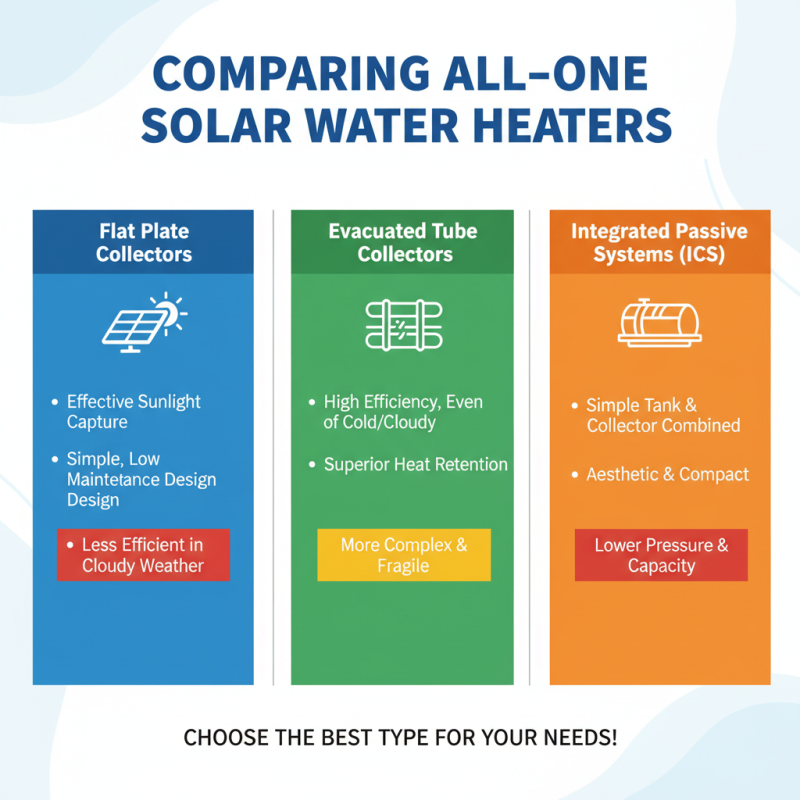
When selecting an all-in-one water solar heater, understanding the types available is essential. There are various designs, each with distinct features. Flat plate collectors are common; they capture sunlight effectively. Their simplicity can lower maintenance needs. However, they may not perform well in extremely cloudy conditions.
Another option is evacuated tube collectors. They are more efficient in colder weather. These collectors use glass tubes to minimize heat loss. Yet, they can be more fragile and expensive to install. Their complexity might lead to higher repair costs. It's crucial to weigh the benefits against potential drawbacks.
Consider the integration capabilities too. Some models offer seamless integration into existing systems. This flexibility could save installation time and expense. However, you must ensure compatibility with your current setup. Proper research can prevent mismatched systems, which leads to inefficiency. Think about the overall energy needs and budget before making any decisions.
Evaluating Efficiency and Performance Ratings of Solar Heaters
Choosing the right solar heater requires careful evaluation. Efficiency is a key factor. Look for models with high performance ratings. These ratings indicate how well a heater converts sunlight into usable hot water. A high efficiency means lower energy costs and consistent hot water supply.
Tips: Check for warranties. A good warranty reflects a manufacturer’s confidence in their product. Read user reviews on efficiency. Real-life experiences can highlight strengths and weaknesses. Also, consider the climate where you live. Not all heaters work the same in different conditions.
Performance is another metric to watch. Many factors influence a solar heater's effectiveness. Location, installation angle, and maintenance play roles in performance. Sometimes, a heater may not perform as expected. Reflect on your unique needs and local weather patterns. It’s essential to match the solar heater to your situation for optimal usage.
How to Choose the Best All In One Water Solar Heater in 2026?
| Model |
Efficiency Rating |
Performance Rating |
Heating Capacity (liters/day) |
Warranty Period |
| Model A |
85% |
4.5/5 |
300 |
5 years |
| Model B |
90% |
4.7/5 |
250 |
7 years |
| Model C |
82% |
4.3/5 |
220 |
3 years |
| Model D |
88% |
4.6/5 |
280 |
6 years |
Assessing Cost Factors and Long-Term Savings for Solar Heaters
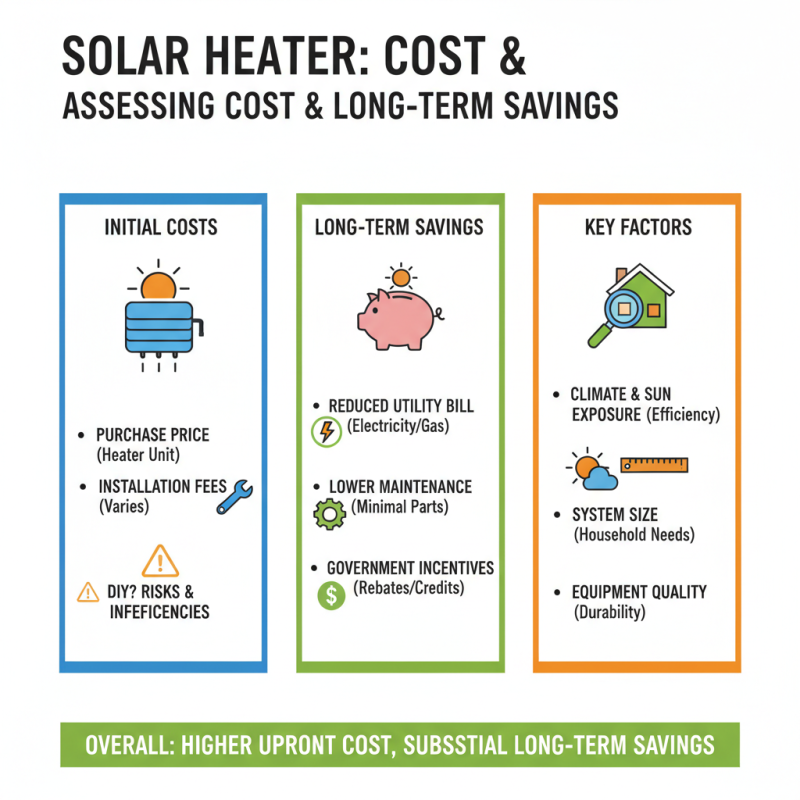
When assessing cost factors for all-in-one water solar heaters, several elements come into play. The initial purchase price often weighs heavily on buyers. However, this is just one piece of the puzzle. Installation costs can vary, substantially impacting overall expenses. Some may opt to install them themselves to save money. Yet, this can lead to errors and inefficiencies.
Long-term savings are crucial when considering a solar heater. Lower utility bills can make a big difference over time. Consumers should calculate potential savings based on their local energy rates. Maintenance costs are also a factor; some models require more frequent upkeep. However, a well-maintained system can yield higher efficiency and savings.
Not all systems perform equally in different climates. Buyers must reflect on their specific circumstances. In hotter areas, solar heaters may operate better and save more efficiently. In contrast, places with cooler climates may require additional heating methods. It's important to weigh these aspects carefully before making a decision. Balancing initial costs with potential long-term savings is key.