Why Choose Instant Electric Water Heaters for Your Home?
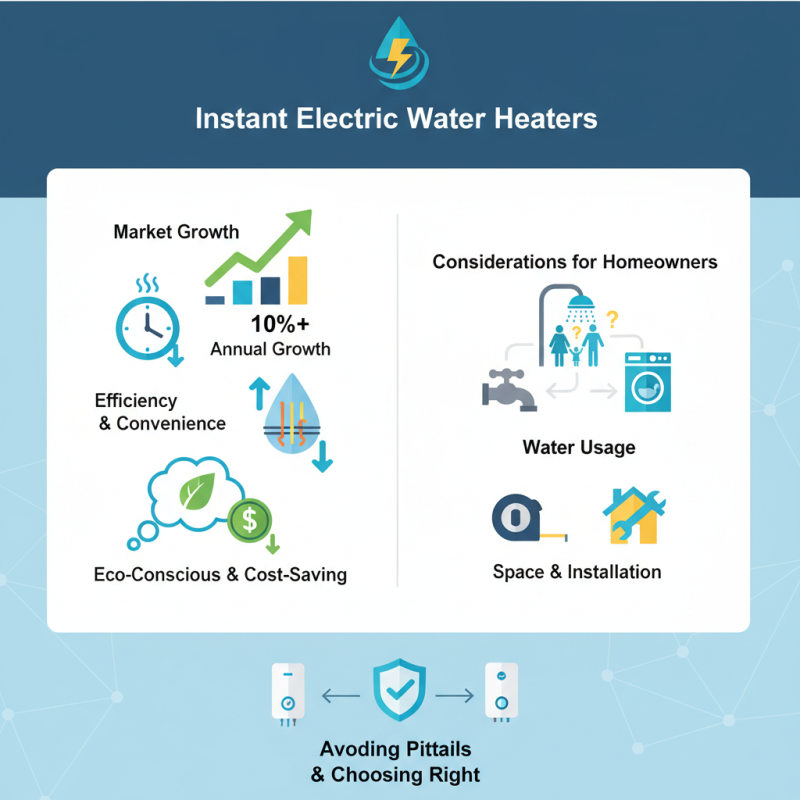
In today's fast-paced world, homeowners are increasingly turning to Instant Electric Water Heaters for their efficiency and convenience. According to a recent industry report by the Global Market Insights Group, the demand for these heaters is expected to grow by over 10% annually in the coming years. This surge indicates a shift towards embracing modern technology in home utilities.
Renowned industry expert Dr. Emily Johnson states, "Instant Electric Water Heaters significantly reduce energy consumption while providing hot water on demand." Her insight highlights the smart choice for environmentally conscious homeowners. These systems not only cater to immediate hot water needs but also contribute to lower utility bills.
However, selecting the right Instant Electric Water Heater can be overwhelming. There are numerous brands and specifications to consider. Homeowners need to reflect on their specific water usage and space availability. Understanding these factors is crucial to avoid common pitfalls, such as overcapacity or inefficient models.
Benefits of Instant Electric Water Heaters for Household Use
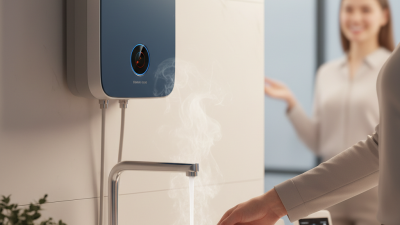
Instant electric water heaters are gaining popularity in homes today. They offer immediate hot water, which can be a game changer for many families. In fact, according to a survey conducted by the Department of Energy, households can save up to 30% on water heating costs by using these systems compared to traditional water heaters. This efficiency comes from their ability to heat water on demand, eliminating the need for a storage tank.
Moreover, these systems occupy less space, making them ideal for compact homes and apartments. This is particularly appealing in urban areas where real estate is limited. A report from the Home Improvement Research Institute suggests that nearly 60% of homeowners prefer space-saving solutions. However, it is essential to consider installation costs. While instant heaters are more efficient, their upfront costs might be higher than conventional units.
User experiences vary. Some love the convenience of instant hot water, while others find the temperature fluctuations challenging. Addressing these concerns is vital for widespread acceptance. Understanding the benefits and limitations of instant electric water heaters can aid homeowners in making informed decisions.
Energy Efficiency of Instant Water Heating Systems
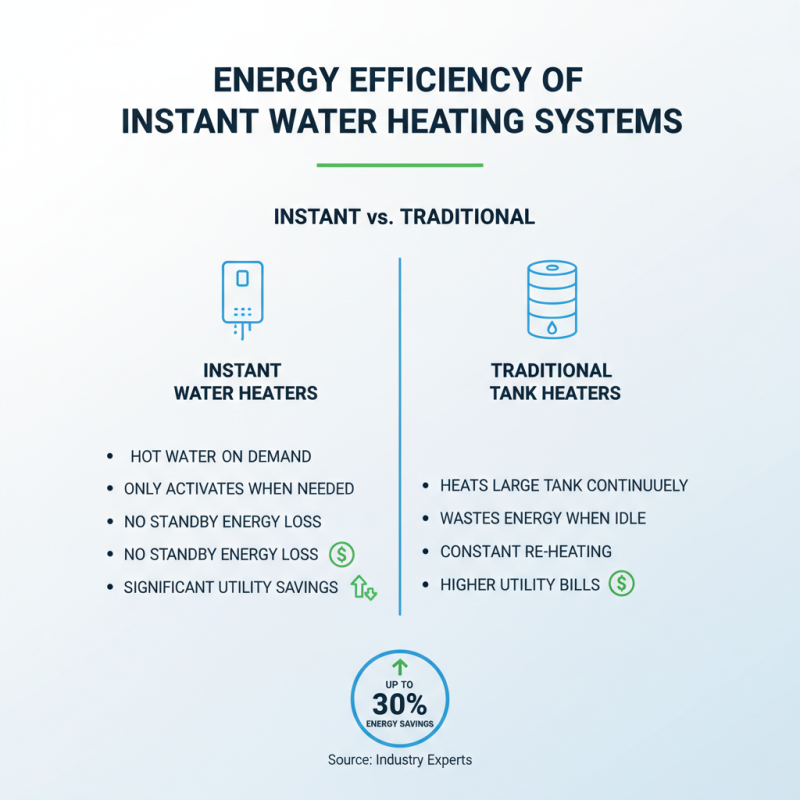
Instant electric water heaters have gained popularity due to their impressive energy efficiency. Unlike traditional systems that heat large tanks of water, instant heaters provide hot water on demand. This means they only activate when needed, reducing unnecessary energy consumption. According to experts, this can lead to significant savings on utility bills over time.
One of the key benefits of these systems is their ability to prevent standby heat loss. Traditional water heaters constantly heat water in a tank, even when it’s not in use. This approach wastes energy. In contrast, instant water heaters eliminate this wastage, leading to a more sustainable home environment. However, prospective users should consider the initial installation costs, which can be higher.
While instant electric water heaters are efficient, they do require proper installation and maintenance to function optimally. Professionals recommend checking for any potential issues regularly. Even so, they can be an excellent choice for households looking to enhance energy efficiency. It's important for homeowners to weigh these factors before making a decision about their water heating solutions.
Space-Saving Advantages of Compact Electric Water Heaters
Instant electric water heaters have become a popular choice for modern homes, especially because of their compact designs. These units are designed to fit into smaller spaces, making them ideal for apartments and homes with limited room. According to the U.S. Department of Energy, traditional tank water heaters can be quite bulky, occupying up to 16 square feet. In contrast, instant electric heaters typically require only a fraction of that space. This space-saving feature adds significant value to homes where every square foot counts.
Besides their compactness, these heaters also offer efficiency. A report from the Energy Information Administration noted that on-demand water heaters can be up to 30% more energy-efficient than traditional models. This efficiency not only saves space but also reduces utility bills. Homeowners can appreciate lower energy costs while maximizing available space. However, there are important considerations, such as the need for specific electrical setups, which may require professional installation.
Compact electric water heaters may also pose limitations. They might not meet high-demand needs in larger households, leading to potential inconveniences. Homeowners should assess their hot water requirements carefully before committing. This reflection can prevent issues down the line, such as insufficient hot water during peak usage times. Ultimately, while compact electric water heaters provide numerous benefits, understanding one's needs remains crucial.
Safety Features of Instant Electric Water Heaters
When considering instant electric water heaters, safety features stand out as crucial factors. These devices typically come equipped with automatic shut-off mechanisms. This feature activates when the temperature exceeds a safe level, significantly reducing the risk of scalding. It’s important to recognize that even with advanced technology, a minor malfunction can still occur. Regular maintenance is key to ensuring these safety features work effectively.
Another important aspect is the overheat protection system. This safety feature monitors the water temperature continuously. If it detects unusually high temperatures, it will turn off the heater. However, users must remain vigilant. Even the best systems can fail under rare conditions. Regular checks and understanding how your heater operates can enhance safety.
Ground fault circuit interrupters (GFCIs) are frequently integrated into electric water heaters. They help prevent electric shock by detecting ground faults. Although GFCIs add an extra layer of safety, they are not foolproof. Users should familiarize themselves with the location of reset buttons. Awareness is essential, as is understanding potential risks in the home environment. Instant electric water heaters can be safe, but responsibility lies with the user to ensure a secure and reliable system.
Advantages of Instant Electric Water Heaters
Cost-Effectiveness Over Time: Instant vs. Traditional Water Heaters
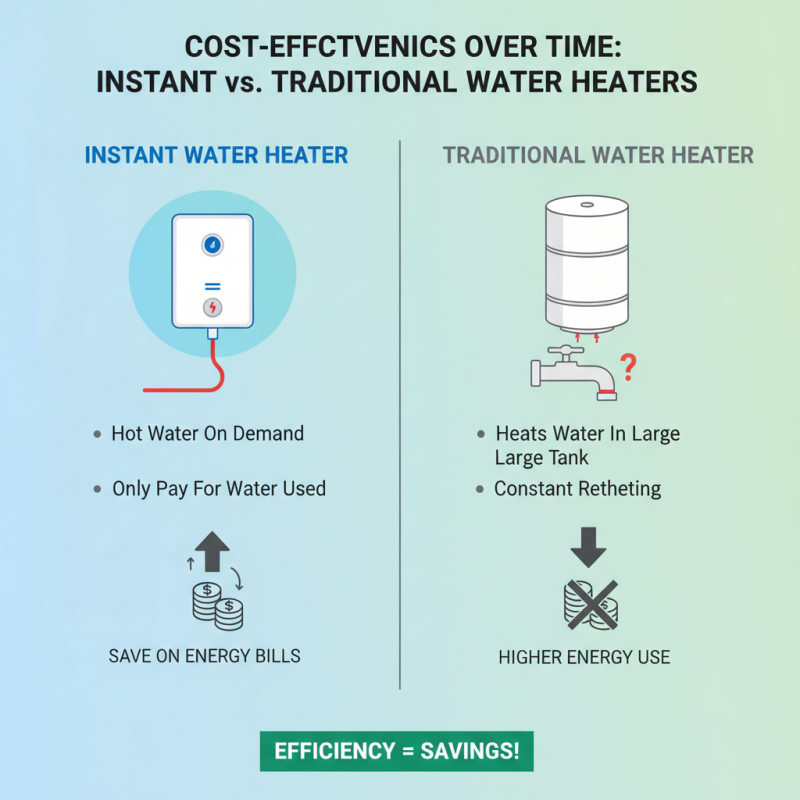
Instant electric water heaters have gained popularity for their cost-effectiveness over time. Unlike traditional water heaters, which heat water in large tanks, instant heaters provide hot water on demand. This means you only pay for the water you use. Such efficiency can lead to substantial savings on your energy bills.
Consider the lifespan of these units as well. Traditional systems can last around 10-15 years. However, tankless systems may last over 20 years with proper maintenance. This durability can make them more appealing in the long run. Many homeowners see their initial investment returned through lower utility bills. Yet, the installation costs can be higher, which might deter some.
While the advantages are clear, it’s essential to recognize possible drawbacks. Instant heaters may struggle to meet high demands during peak usage times. Families with multiple bathrooms might find this challenging. It’s crucial to evaluate your household's needs before making a decision. Balancing immediate costs with long-term savings requires careful thought. Make an informed choice that suits your lifestyle and budget.