Leave Your Message
Choosing a Corn Dryer Machine in 2026 requires more than comparing advertised capacity and purchase prices. A reliable decision begins with your harvest conditions. Consider daily corn volume, starting moisture, target moisture, fuel availability, electricity quality, and local weather. A machine handling 10 tons per hour may still perform poorly if airflow is uneven or the grain enters too wet.
Dr. Dirk Maier, a respected grain-drying specialist, has stated, “Drying is a quality-preservation process, not merely a moisture-removal process.” This principle should guide every equipment comparison. The right Corn Dryer Machine should reduce moisture evenly, protect kernels from cracking, and maintain safe operating temperatures. Look closely at drying zones, fan design, heat recovery, moisture sensors, cleaning access, and automatic controls. Small details matter. A blocked screen can quietly increase fuel use and create uneven grain.
Cost is important, but it should not dominate the decision. Calculate fuel consumption, maintenance needs, labor savings, spare-parts access, and expected service life. Ask the supplier for verified performance data under conditions similar to yours. Marketing figures can be optimistic. Sometimes, I would choose a simpler dryer with dependable local support over a smarter model with limited technicians nearby. That choice may not look impressive on paper. It can still protect harvest quality during a difficult season. This guide will examine practical specifications, operating risks, energy efficiency, and long-term value, helping buyers make a careful and evidence-based decision in 2026.
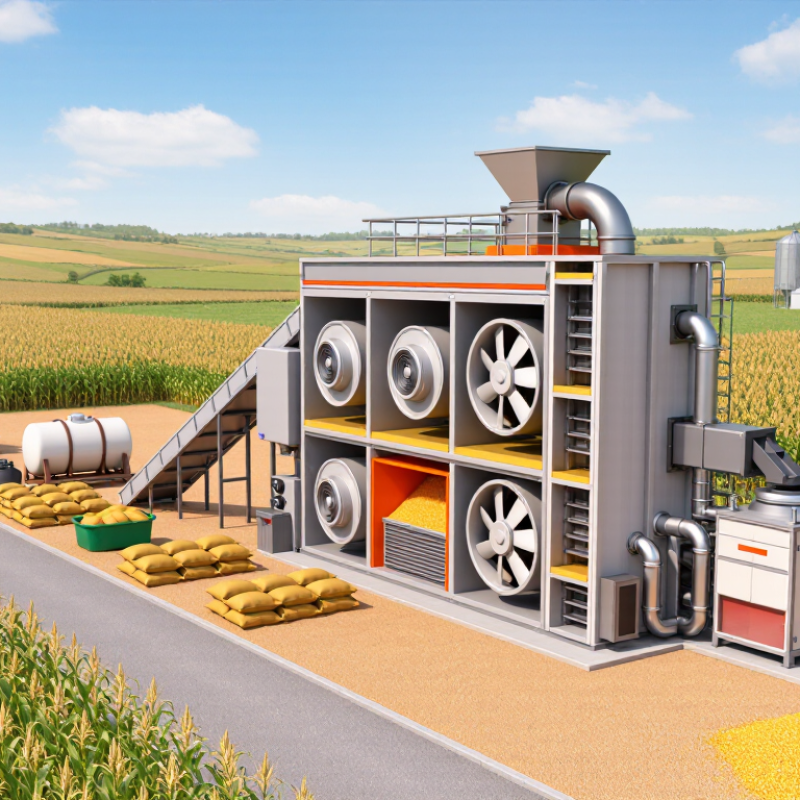
How to Choose a Corn Dryer Machine in 2026?
Define Your Corn Drying Requirements
Before comparing corn dryer machines, measure your actual drying needs. Record the incoming moisture content after harvest, not an estimated figure. Fresh corn may enter at 24% moisture, while stored corn may need only minor adjustment. Also define your target level, often near 14% for safer storage. Local humidity and temperature can change the result.
Capacity matters, but peak capacity can mislead. Estimate tonnes per hour during your busiest harvest days. Then check whether the dryer can handle uneven grain flow, different kernel sizes, and changing moisture levels. A batch dryer may suit a smaller farm with flexible schedules. Continuous equipment may fit large operations needing steady output. Energy use deserves careful attention. Compare fuel or electricity consumption per tonne, not only the purchase price.
Tips: Test a small corn sample before full operation. Check moisture at the dryer inlet and outlet. Inspect kernels for cracks, darkening, or excessive heat damage. Keep records for each batch. I still find this step easy to underestimate. A machine that dries quickly may reduce quality if airflow or temperature control is poor. Ask for clear operating data, maintenance requirements, and verified safety instructions. Ensure trained workers can clean the chamber, inspect sensors, and respond to blockages without unsafe shortcuts.
| Requirement Dimension | Typical Requirement | Recommended Dryer Specification | Why It Matters | Key Selection Check |
|---|---|---|---|---|
| Initial Corn Moisture | 18%–30% moisture content, wet basis | Choose a dryer rated for the highest moisture level expected during harvest. | Higher incoming moisture increases drying time, fuel consumption, and the number of drying passes required. | Confirm the machine’s rated capacity at your actual starting moisture, not only at ideal conditions. |
| Target Storage Moisture | Approximately 14%–15% for short- to medium-term grain storage; around 13% may be preferred for longer storage depending on conditions. | Select a dryer with accurate outlet-moisture control and adjustable drying intensity. | Over-drying reduces saleable weight, while under-drying increases the risk of mold, heating, and spoilage. | Ask for moisture uniformity data and verify that the sensor can be calibrated for corn. |
| Required Throughput | Small farms: 1–5 tonnes/hour; medium operations: 5–20 tonnes/hour; large facilities: over 20 tonnes/hour. | Size the dryer for peak harvest demand, with approximately 10%–20% spare capacity where practical. | A dryer that is too small can create harvest delays and grain congestion at receiving or storage areas. | Compare rated tonnes/hour at the intended moisture reduction, such as 25% to 15%. |
| Moisture Reduction | Commonly 5–12 percentage points, such as reducing corn from 25% to 15% moisture. | Use a continuous-flow or batch dryer capable of achieving the required reduction without excessive residence time. | Drying capacity is strongly affected by the amount of water that must be removed from each tonne of corn. | Request performance figures for your specific moisture reduction and ambient operating conditions. |
| Drying Temperature | Typical grain-air temperatures are about 60–110°C, depending on dryer design, throughput, and end use. | Choose adjustable temperature control with separate settings for food-grade, seed, feed, or milling corn. | Excessive heat can reduce germination, increase stress cracking, and affect milling quality. | Check whether the dryer measures and controls grain temperature, air temperature, or both. |
| Corn End Use | Feed corn, milling corn, food-grade corn, and seed corn have different quality requirements. | For seed or high-quality milling corn, select low-temperature or multi-pass drying with gentle grain handling. | End use determines acceptable heat exposure, breakage, stress cracking, and final moisture uniformity. | Match the machine’s operating profile to the buyer’s quality specifications and germination requirements. |
| Energy Source | Common options include natural gas, liquefied petroleum gas, diesel, biomass, electricity, or hybrid systems. | Choose the fuel that is reliably available, safe to store, and economical at your location. | Fuel availability and local energy prices often have a greater effect on operating cost than the initial purchase price. | Compare energy consumption in kWh or fuel units per tonne of water removed, not only per tonne of corn. |
| Energy Efficiency | Efficient systems commonly use heat recovery, variable-speed fans, insulation, and automatic airflow control. | Prioritize recirculation or heat-recovery features when operating hours and annual throughput are high. | Removing water requires substantial energy; efficiency improvements can reduce long-term operating costs. | Request measured energy consumption under a defined moisture reduction and ambient temperature. |
| Drying Uniformity | Target consistent moisture throughout the grain stream, with minimal wet and over-dried portions. | Select a dryer with even airflow distribution, controlled grain movement, and automatic mixing or recirculation where needed. | Uneven drying can cause storage hot spots, quality disputes, and additional cooling or blending work. | Ask how moisture variation is measured and whether the system supports automatic adjustment. |
| Grain Damage Control | Limit broken kernels, stress cracks, fines, and excessive mechanical impact. | Choose low-drop elevators, smooth transitions, adjustable grain flow, and staged drying where appropriate. | Mechanical and thermal damage can reduce grade, storage stability, and milling yield. | Review test results for broken kernels and stress cracks using corn similar to yours. |
| Cooling Requirement | Corn normally needs cooling after drying before long-term storage. | Use a dryer with an integrated cooling zone or provide separate cooling capacity in the handling system. | Hot grain placed directly into storage can cause condensation, moisture migration, and localized spoilage. | Verify the expected grain discharge temperature and cooling-air requirements. |
| Automation Level | Basic manual control to fully automatic moisture, temperature, airflow, and fuel management. | For frequent or large-scale operation, choose automatic control with alarms, data logging, and remote monitoring. | Automation improves consistency and reduces the risk of operating errors during long harvest shifts. | Check sensor accuracy, calibration procedures, emergency shutdowns, and backup manual controls. |
| Operating Environment | Ambient temperature, humidity, altitude, dust, and seasonal weather vary by location. | Select a system designed for the local climate and install adequate intake filtration and ventilation. | Cold or humid air can reduce drying performance, while dust can affect burners, fans, sensors, and electrical components. | Confirm the manufacturer’s operating range and derating information for high altitude or cold weather. |
| Installation Space | Requirements include dryer footprint, working clearance, grain infeed, discharge, ducting, and storage access. | Allow additional space for maintenance, cleaning, fire safety, and future expansion. | Insufficient clearance can make routine cleaning and repairs difficult and can restrict safe grain flow. | Review a complete layout showing foundations, service access, duct routes, elevators, and electrical connections. |
| Electrical Supply | Small systems may use single-phase power; larger fans and conveyors commonly require three-phase power. | Match motor voltage, frequency, starting current, and total connected load to the available electrical service. | Inadequate power capacity can cause voltage drops, motor trips, downtime, or costly electrical upgrades. | Obtain the full electrical load list and confirm compatibility with local codes. |
| Dust and Fire Safety | Corn dust is combustible and requires effective housekeeping, ventilation, grounding, and ignition-source control. | Choose equipment with appropriate guards, temperature monitoring, spark or fire protection provisions, and accessible cleaning points. | Dust accumulation and overheated bearings or grain can create serious safety hazards. | Confirm compliance with applicable local grain-handling, electrical, fire, and occupational safety regulations. |
| Maintenance and Cleaning | Routine inspection and cleaning are required during harvest and before seasonal storage. | Prefer accessible inspection doors, replaceable wear parts, standard bearings, and simple cleaning routes. | Regular maintenance protects drying efficiency, product quality, and equipment service life. | Evaluate daily, weekly, and seasonal maintenance tasks, spare-part availability, and service response time. |
| Total Cost of Ownership | Includes purchase, installation, energy, labor, maintenance, spare parts, and possible building or electrical upgrades. | Compare total cost per tonne dried over the expected annual throughput and service life. | A lower purchase price may result in higher fuel use, labor requirements, or maintenance costs. | Build a three- to five-year operating-cost estimate using local fuel, electricity, labor, and service prices. |