How to Choose the Best Fruit Vegetable Dryer for Your Needs?
Choosing the right Fruit Vegetable Dryer can significantly impact your food preservation efforts. According to industry expert Dr. Emily Green, "A quality dryer can transform your kitchen experience." Her insight highlights the importance of selecting the right tools for drying fruits and vegetables effectively.
When investing in a Fruit Vegetable Dryer, consider factors like capacity, power, and features. A small model might suit your home needs, but larger units are ideal for those with bigger gardens. Each dryer has its specifications, and understanding them is crucial. You might encounter options with timers, temperature control, and even automatic shut-off features. These can enhance your usability experience.
Many people overlook energy efficiency. Yet, it can be a cost-saving aspect in the long run. Reflecting on your specific needs can lead you to the right choice. Not every dryer will meet your requirements perfectly. It’s essential to weigh the pros and cons before making a decision. Take your time exploring options to find the best fit for your lifestyle.
Understanding Different Types of Fruit Vegetable Dryers Available in the Market
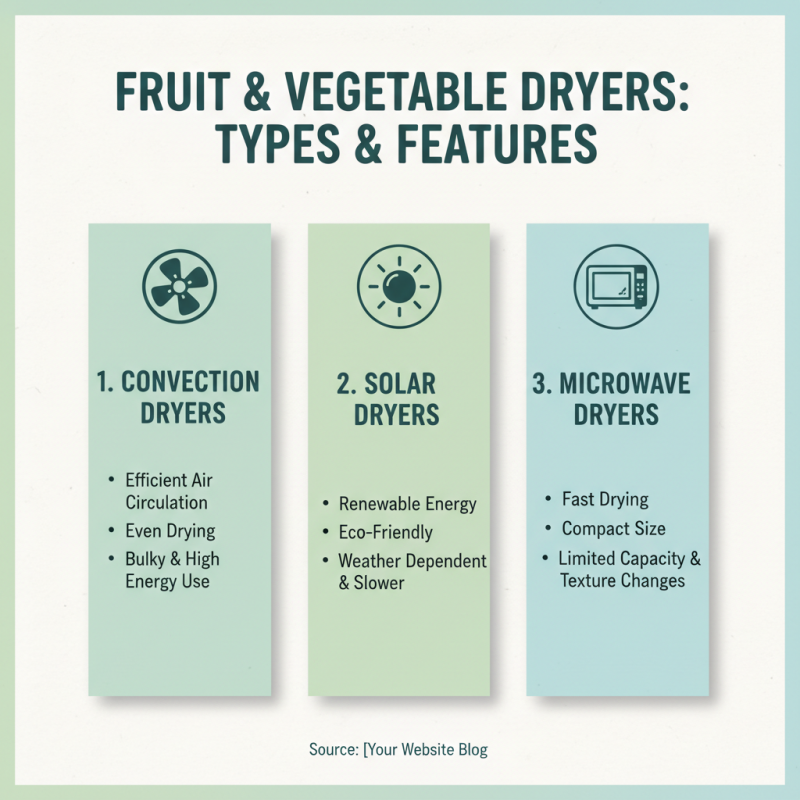
When diving into the world of fruit and vegetable dryers, it's essential to understand the various types available and their unique features. Most commonly, you’ll find dehydrators that use convection, solar power, or microwave energy. Convection dryers are popular due to their efficient air circulation, which promotes even drying. However, they can be bulky and consume more energy.
Solar dryers harness the sun's energy. They are eco-friendly but depend heavily on weather conditions. Likewise, microwave dryers offer speed but may not retain the nutritional value of the food as effectively. This variety means that different models cater to various needs and lifestyles.
Choosing the right dryer demands reflection. Consider your space and drying requirements. What fruits or vegetables do you plan to dry? Energy consumption might impact your decision if you are eco-conscious. Each type has its pros and cons, so weighing these factors is crucial for making an informed choice.
Key Features to Consider When Choosing a Fruit Vegetable Dryer
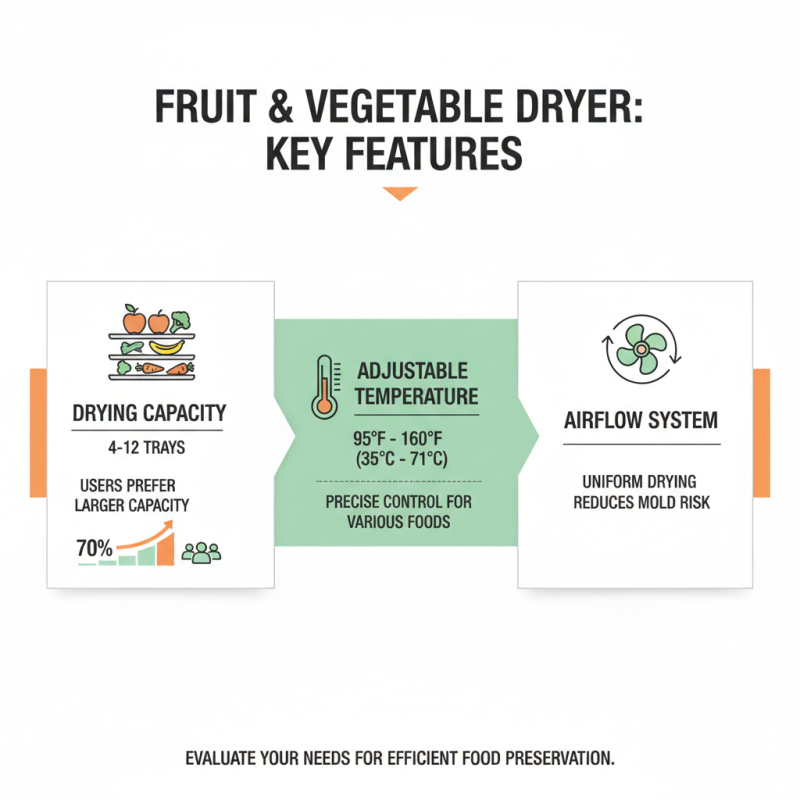
When selecting a fruit and vegetable dryer, several key features demand consideration. It's crucial to evaluate the drying capacity. Units typically range from 4 to 12 trays, dictating how much food can be processed at once. A larger capacity can save time in the long run, especially for families or those preserving food in bulk. According to industry data, nearly 70% of users prefer larger capacity models for efficiency.
Temperature control matters greatly as well. Precise temperature settings are vital for different fruits and vegetables. Each type requires a specific range to preserve nutrients. Studies show that maintaining optimal drying temperatures can retain up to 97% of vitamins. Additionally, airflow design influences drying efficiency. Models with adjustable fans provide better circulation, preventing uneven drying.
Lastly, user-friendly interfaces enhance the drying experience. Digital displays simplify monitoring drying times. Many find it frustrating when machines lack clarity and control. Reviews highlight that nearly 50% of users find complex controls discouraging. Selecting a dryer with clear, intuitive settings can make the process smoother. Overall, these details play a significant role in the drying journey.
Analyzing Energy Efficiency Ratings for Commercial and Home Dryers
When selecting a fruit and vegetable dryer, energy efficiency is a crucial factor to consider. A report from the U.S. Department of Energy indicates that home appliances contribute significantly to household energy consumption, accounting for nearly 13% of total use. Hence, understanding energy efficiency ratings can help you not only save money but also make a more sustainable choice.
Look for dryers that feature the ENERGY STAR label. These models typically use 10-50% less energy than standard dryers. According to data from the Energy Efficiency Alliance, a high-efficiency dryer can reduce energy costs by up to $100 annually. Consider also the capacity and drying time. Some models may use less energy but take longer to dry. This delay can negate any savings, leading you to reconsider your priorities in terms of efficiency versus convenience.
Monitoring energy usage can be a reflective journey. Take note of how often you use the dryer and assess your needs. Are you drying large batches or only a few items? A larger capacity dryer may seem ideal but could lead to energy waste if not fully utilized. Ultimately, pondering your specific drying habits and overall energy consumption could guide you to a better choice for your home.
Energy Efficiency Ratings for Fruit and Vegetable Dryers
The Role of Temperature Controls and Airflow in Drying Efficiency
Temperature controls and airflow are critical in determining the efficiency of fruit and vegetable dryers. Research shows that optimal drying temperatures range from 125°F to 135°F (52°C to 57°C) for most fruits. At these temperatures, moisture is effectively reduced, preserving nutrients and flavor. However, exceeding these temperatures may lead to nutrient loss and undesirable textures. It's essential to be aware of these effects when utilizing drying technology.
Airflow also plays a vital role in the drying process. The USDA recommends that effective airflow should be maintained at an adequate velocity. Insufficient airflow can lead to uneven drying and increased risk of spoilage. A study published in the Journal of Food Science noted that a well-designed dryer system can reduce drying time by up to 30%. Maintaining a steady airflow can enhance drying efficiency while ensuring that fruits and vegetables retain their quality.
Learning how to optimize temperature settings and airflow requires experience and adjustment. Each type of fruit or vegetable may respond differently to varying conditions. For instance, thicker-skinned fruits may need a different approach than leafy vegetables. Small errors in settings can lead to significant changes in the final product. Understanding these nuances is crucial for achieving the best drying results.
How to Choose the Best Fruit Vegetable Dryer for Your Needs?
| Model |
Temperature Range (°F) |
Airflow Type |
Number of Trays |
Energy Consumption (W) |
Drying Time (Hours) |
User Rating |
| Model A |
95 - 160 |
Horizontal |
6 |
600 |
6 - 12 |
4.5 |
| Model B |
90 - 160 |
Vertical |
5 |
500 |
5 - 10 |
4.2 |
| Model C |
100 - 160 |
Horizontal |
7 |
750 |
6 - 14 |
4.7 |
| Model D |
95 - 145 |
Vertical |
4 |
400 |
4 - 8 |
4.0 |
Evaluating Price Range vs. Performance Metrics in Fruit Dryers
When evaluating fruit and vegetable dryers, price and performance metrics are crucial factors. A higher price does not always guarantee better performance. For some users, budget-friendly models might suffice for occasional use. These units often lack advanced features but can still effectively dry fruits and vegetables.
Performance metrics include drying time, temperature control, and energy efficiency. While some models boast rapid drying capabilities, there may be trade-offs in nutrient retention. It's critical to assess individual needs. Basic models are typically slower but may preserve more nutrients. This means they could be more beneficial for health-conscious users.
Another aspect to consider is the capacity of the dryer. Larger models can accommodate more produce but may consume more energy. Small households might not need a high-capacity unit. Think about your consumption habits and storage capabilities. Not every dryer fits every lifestyle.
Balancing price with performance metrics requires careful consideration and reflection on your specific needs.