Instant Electric Water Heaters promise hot water on demand, but choosing one in 2026 requires more than comparing price tags. A compact unit above a laundry sink may need very different power and flow capacity from a whole-home model. Check the rated flow in gallons per minute and the temperature rise it can deliver. A shower that feels steady in summer may turn lukewarm when winter inlet water is colder. Small details matter.
The U.S. Department of Energy’s Energy Saver guidance reports that tankless water heaters can be 8–34% more energy efficient than conventional storage models in households using 41 gallons of hot water daily or less. At about 86 gallons daily, the cited advantage falls to 8–14%. These figures describe tankless technology broadly, not a guaranteed saving for every electric unit. Numbers need context. Actual bills depend on local electricity rates, incoming water temperature, usage patterns, and installation.
A careful comparison should also cover circuit requirements, wiring capacity, flow at multiple outlets, temperature controls, warranty terms, and recognized safety certification. Ask a qualified installer to verify the electrical supply before purchase; a sleek product listing cannot confirm that an older panel is suitable. Compare measured specifications, not just marketing claims. This guide explains how to assess those trade-offs, estimate operating costs, and choose a unit that suits the home. Some estimates will still be imperfect, because household habits change and real-world conditions rarely match a test sheet exactly.
Before choosing an instant electric water heater, track your household’s hot-water use for a week. Note when showers overlap, how long they run, and whether laundry or dishwashing happens at the same time. Record the number of people using hot water during morning and evening peaks. Small details matter. A quick shower and a long shower create very different demands. The U.S. Department of Energy’s Energy Saver guidance says water heating accounts for roughly 18% of home energy use, making your usage pattern relevant to both comfort and operating costs. That figure is a national estimate, not a prediction for your home.
Flow rate is another practical measure. The Department of Energy’s “Tankless or Demand-Type Water Heaters” guidance gives a typical tankless output range of 2–5 gallons per minute and notes that gas units generally deliver higher flow than electric models. Add the flow rates of fixtures likely to run together, such as a shower and kitchen tap, then compare the result with a heater’s rated capacity. Also consider the temperature of incoming water: colder supply water requires a larger temperature rise to reach your preferred setting. Real homes are messier. If you are unsure about simultaneous use, keep a simple log or ask a qualified installer to assess peak demand before selecting a unit.
Choosing an instant electric water heater starts at the breaker panel, not the bathroom tap. The U.S. Department of Energy’s Energy Saver guidance estimates that water heating uses about 20% of household energy. A powerful electric unit can place a concentrated load on your service. For example, an 18-kilowatt heater at 240 volts draws 75 amps; a 27-kilowatt model draws about 113 amps. These are operating-current calculations, not breaker recommendations. Check the unit’s nameplate.
Ask a qualified electrician to calculate your home’s total electrical load and inspect the main service, panel rating, wiring, and available circuit spaces. Empty breaker slots do not prove spare capacity. The electrician should confirm conductor and overcurrent protection sizes against the installation instructions and local electrical requirements.
Also check the route from panel to heater: long cable runs, tight wall cavities, and plumbing changes can add cost. Do not guess. I would not trust a faded panel schedule without checking it; it can be wrong.
The DOE figure describes typical household energy use, not your home’s available electrical capacity.
How to Choose Instant Electric Water Heaters in 2026
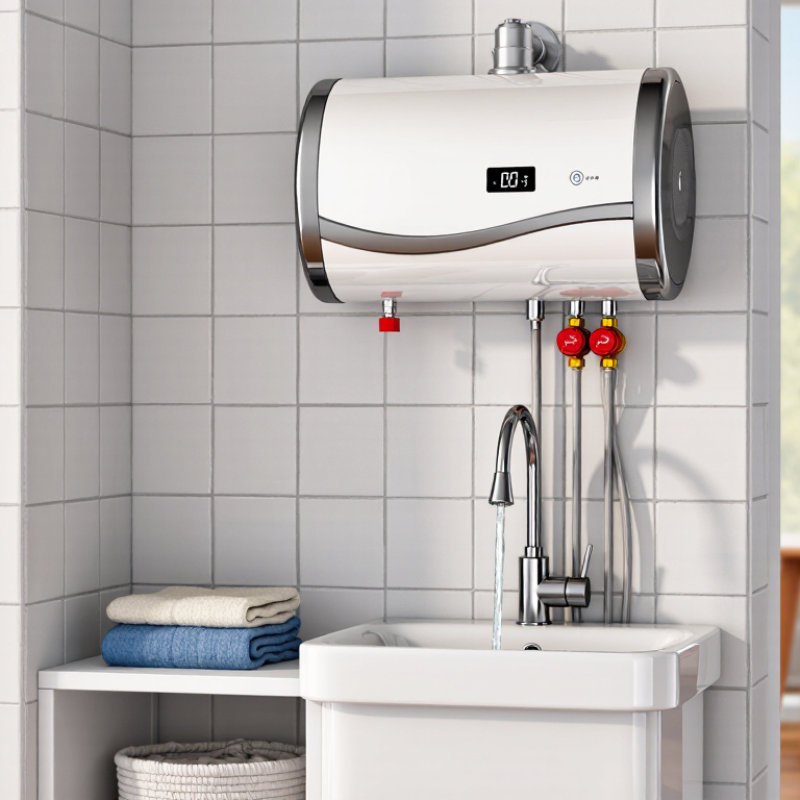
Instant electric heaters differ in where they serve water. A point-of-use unit supplies one nearby tap, such as a bathroom sink. A whole-home model serves several fixtures, but needs enough electrical capacity and output for the household. Check the required flow rate in gallons per minute, not just the heater’s maximum rating. A shower and kitchen tap running together can exceed that rating. Colder incoming water can also reduce the flow available at a comfortable temperature. Small details matter.
Temperature control deserves equal attention. Look for clear settings and stable adjustment, then compare the heater’s minimum and maximum temperatures with your needs. Digital displays can make changes easier, but they do not compensate for an undersized unit or fluctuating water pressure. Installation conditions matter, too. Have a qualified professional check the circuit, wiring, and expected demand before purchase. I’d avoid choosing by peak flow alone; it is an easy number to compare, but not the whole story.
Tips: List which fixtures may run at once, then estimate their combined flow. Check your local winter inlet-water temperature if possible. Leave a little capacity for busy mornings, while remembering that extra capacity may require electrical upgrades. Read the installation specifications carefully. They can be less clear than they should be.
Choosing an instant electric water heater in 2026 starts with safety and a realistic look at household demand. The U.S. Department of Energy estimates that water heating accounts for about 18% of home energy use. That makes efficiency worth checking, but a high rating alone does not guarantee lower bills. Compare Uniform Energy Factor (UEF) ratings among similar heater types and capacities. Then match the unit’s flow rate to actual use: running a shower and kitchen tap together can exceed its output.
Small detail. Big difference.
Check for over-temperature protection, clear fault indicators, and installation instructions that specify suitable wiring and circuit protection. These units can draw substantial current. Have a qualified installer check the home’s panel and wiring against the heater’s nameplate before purchase.
Do not assume an existing circuit is adequate. The DOE’s 2024 final water-heater standards rule generally sets compliance dates in 2029, so it is not a new blanket 2026 installation requirement. Local electrical and plumbing codes may differ, and the adopted edition matters. Ask the installer to confirm which rules apply in your area.
I would not choose by efficiency figures alone; a rushed electrical upgrade can erase the expected savings.
The purchase price is only one part of an instant electric water heater’s cost. Ask for an estimate that includes installation, permits where applicable, and any electrical-panel or wiring upgrades. A unit that fits beneath a sink may still need a dedicated circuit. That detail can change the quote.
Compare expected energy use against your household’s hot-water habits. Check the heater’s required flow rate, too: running a shower and kitchen tap together may exceed its capacity. A lower price can look attractive until an undersized unit struggles during busy mornings. Keep utility rates and local usage patterns in mind; online cost estimates rarely match every home.
Read warranty terms beyond the headline number of years. Coverage may differ for the heating element, other parts, and labor, and routine maintenance may be required. Ask who handles service, how quickly parts are usually available, and whether qualified technicians work nearby. Get the answers in writing. Small details matter. I would still leave room for uncertainty: repair needs depend on water quality, installation, and use, so even careful comparisons cannot promise a specific lifespan.
| Heater Size | Typical Application | Approx. Flow at a 60°F Temperature Rise | Estimated Installed Cost | Modeled Electricity Use | Estimated Annual Electricity Cost | Warranty Terms to Compare | Long-Term Support Checks | Estimated 5-Year Total Cost |
|---|---|---|---|---|---|---|---|---|
| 3.5 kW point-of-use | One low-flow sink or a small, occasional-use outlet; generally not a whole-home unit. | About 0.4 gallons per minute | $300–$800 | About 546 kWh/year, modeled at 10 gallons heated per day | About $93/year | Check the written parts and heating-element coverage, exclusions, and claim requirements. Terms depend on the specific model. | Confirm replacement-element availability, technical support contact details, and whether local service providers will work on the unit. | $765–$1,265 |
| 11 kW compact unit | A single low-flow shower or small fixture group, subject to incoming-water temperature and electrical capacity. | About 1.2 gallons per minute | $700–$1,800 | About 1,367 kWh/year, modeled at 25 gallons heated per day | About $232/year | Compare coverage length for parts and heating elements, labor coverage, and conditions that could void coverage. | Ask how to obtain parts and troubleshooting assistance, and whether service documentation will remain accessible. | $1,860–$2,960 |
| 18 kW whole-home unit | May suit a smaller household or warm-climate home; simultaneous fixture use can reduce available flow. | About 2.0 gallons per minute | $900–$2,400 | About 2,187 kWh/year, modeled at 40 gallons heated per day | About $372/year | Review the complete warranty document, including parts, labor, required maintenance, and any registration deadlines. | Check local installer familiarity, parts ordering options, and the process for warranty service. | $2,760–$4,260 |
| 27 kW whole-home unit | Higher-demand use where the home’s electrical service and wiring can support the load. | About 3.1 gallons per minute | $1,200–$3,000 | About 3,008 kWh/year, modeled at 55 gallons heated per day | About $511/year | Confirm coverage for all heating elements and controls, plus whether labor, shipping, or diagnostic costs are excluded. | Before buying, confirm that parts, technical assistance, and qualified local service are available for the intended installation area. | $3,755–$5,555 |
Cost figures are illustrative U.S. planning estimates, not quotes. Five-year totals equal estimated installed cost plus five years of modeled electricity use; they exclude electrical-service upgrades, financing, maintenance, and repairs. Electricity use assumes a 60°F temperature rise, approximately 98% heating efficiency, and an electricity rate of $0.17 per kWh. Actual use and flow depend on household demand, inlet-water temperature, voltage, and local utility rates. Installed-cost ranges vary by location and site conditions; obtain local quotes and check whether panel or wiring upgrades are required. Warranty and support terms are model-specific, so verify them in writing before purchase.