Why Invest in a Rice Dryer for Your Business Needs?
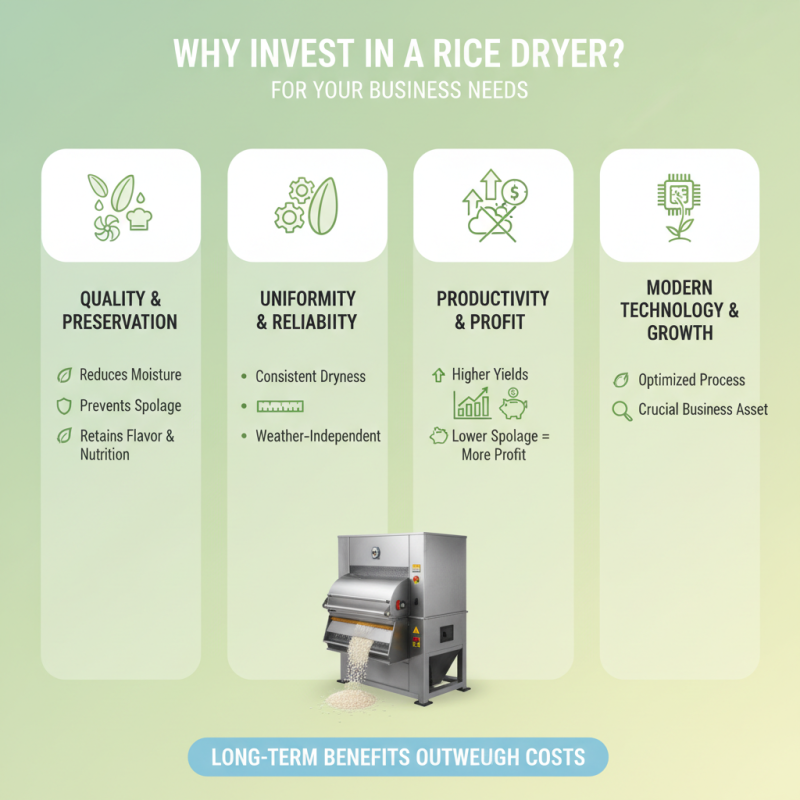
Investing in a rice dryer can significantly elevate your business operations. A rice dryer efficiently reduces moisture content in harvested rice. This process preserves quality and prevents spoilage. With proper drying, rice retains its flavor and nutritional value. A rice dryer offers uniformity, ensuring all grains reach optimal dryness.
Many businesses struggle with inconsistent quality due to inadequate drying methods. Relying on the sun is not always practical. Weather conditions can be unpredictable. Investing in a rice dryer provides a reliable solution. It enhances productivity and improves storage longevity. By using advanced technology, a rice dryer optimizes the drying process.
While the initial investment might seem daunting, the long-term benefits outweigh the costs. Lower spoilage rates lead to higher profits. Business owners should address their unique needs when selecting a rice dryer. Researching different models will help in making an informed decision. Overall, a rice dryer could become a crucial asset for businesses in the rice industry.
Benefits of Using a Rice Dryer for Agricultural Efficiency
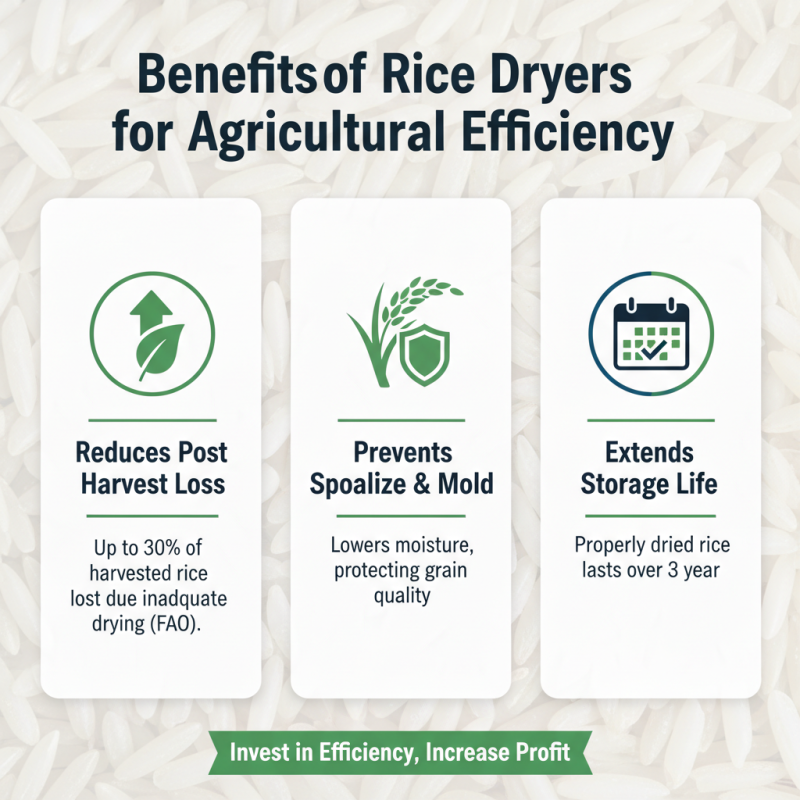
Investing in a rice dryer can significantly enhance agricultural efficiency. According to a report from the Food and Agriculture Organization (FAO), up to 30% of harvested rice can be lost due to inadequate drying methods. A reliable rice dryer reduces this wastage. By effectively lowering moisture levels, it protects the grain from mold and spoilage. Studies show that properly dried rice can maintain quality for over a year.
Additionally, using a rice dryer fosters better marketability. The USDA reports that moisture content below 14% leads to higher selling prices. Farmers utilizing advanced drying technology see a price increase of up to 15%. This improvement directly affects profitability. However, many small-scale farmers hesitate to invest due to initial costs. Despite these concerns, the long-term benefits outweigh upfront investments.
There are challenges to consider. Not all drying systems are energy efficient. Some may require substantial power inputs, increasing operational costs. Seeking a balance between efficiency and cost is crucial. Many farmers need more awareness about the latest technologies. They must explore options that align with their needs while ensuring sustainability.
Understanding Different Types of Rice Dryers Available in the Market
When considering a rice dryer for your business, understanding the types available is crucial. There are primarily three types: continuous, batch, and hybrid dryers. Each type serves different scales of operation.
Continuous dryers, for instance, are ideal for large-scale manufacturers. They can handle high volume, allowing for efficient drying of rice within short durations.
Batch dryers, on the other hand, suit smaller operations. They require less capital investment but may lead to slower processing times. Additionally, data from the Food and Agriculture Organization (FAO) indicates that improper drying could lead to a loss of 10-20% in grain quality. This underscores the importance of choosing the right dryer for your needs.
Hybrid dryers combine features from both types, often resulting in versatility and efficiency. According to a recent industry report, using the right dryer can reduce energy consumption by up to 30%. Such data highlights the environmental and economic benefits of investing in modern drying technology. However, many businesses overlook maintenance, which can lead to inefficient operations. Evaluating your specific needs and equipment performance is essential in making an informed decision.
Cost Analysis: Investing in a Rice Dryer vs. Traditional Drying Methods
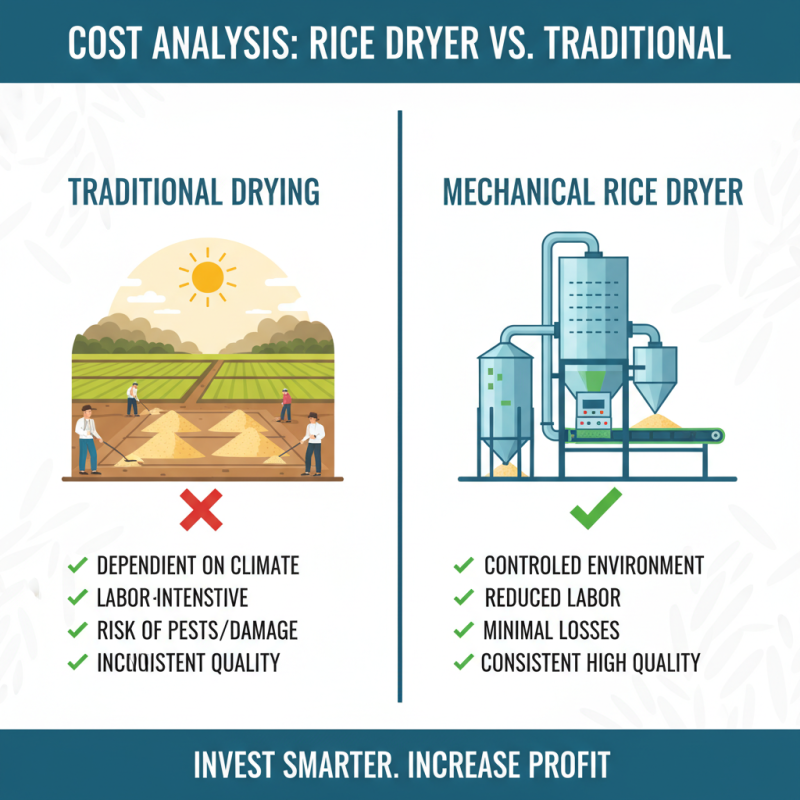
Investing in a rice dryer can significantly impact your business's efficiency and profit margins. Traditional drying methods often depend on climate conditions and are labor-intensive. Many farmers face losses due to uneven drying or damage from pests. Rice dryers offer a controlled environment that can mitigate these risks. They can ensure consistent moisture content, which is crucial for storage and quality.
Cost analysis reveals important insights. Traditional methods may seem less expensive at first. However, hidden costs arise from potential crop losses and labor inefficiencies. A rice dryer may require a higher initial investment but yields long-term savings. It reduces the need for manual labor and improves overall quality. Additionally, faster drying times can lead to quicker turnarounds and increased capacity.
Reflecting on the decision to invest in a rice dryer, consider your business scale and goals. Are you ready to embrace technology for better efficiency? Evaluate the costs against the potential gains. Many businesses find that the transition pays off over time. However, the journey is not without challenges. Understanding your specific needs and market can lead to a more informed decision.
How Rice Dryers Improve Grain Quality and Shelf Life
Investing in a rice dryer can significantly enhance grain quality and extend shelf life. According to a report from the Food and Agriculture Organization (FAO), properly dried rice can retain its quality for up to two years, compared to just six months for improperly dried grain. Moisture control is critical. If rice contains more than 14% moisture, it is prone to mold and spoilage. A rice dryer helps achieve optimal moisture levels, ensuring that the grain remains fresh.
Rice dryers not only improve storage life but also enhance marketability. Studies show that grains with lower moisture content fetch higher prices. In the Philippines, for example, dried rice can command a price premium of up to 15%. The drying process also reduces the chances of pest infestations, which can compromise the quality of your product.
**Tip:** Regular maintenance of your rice dryer is crucial. Investing time in cleaning the equipment can prevent contamination and ensure efficiency.
**Tip:** Monitor moisture levels with a reliable meter. Consistent checking helps maintain the quality of your rice and avoids costly losses.
Embracing modern drying technology is vital for increasing profitability. However, not every operation may have the funds upfront for a rice dryer. This means businesses must weigh their options carefully.
Why Invest in a Rice Dryer for Your Business Needs? - How Rice Dryers Improve Grain Quality and Shelf Life
| Feature |
Benefit |
Impact on Business |
| Consistent Drying |
Ensures uniform moisture content |
Enhances grain quality and reduces spoilage |
| Improved Shelf Life |
Prevents mold and bacteria growth |
Increases product marketability |
| Energy Efficiency |
Reduces energy consumption |
Lower operational costs and higher profit margins |
| Versatility |
Can handle different grain types |
Broadens product range and customer base |
| Automation Features |
Reduces manual labor requirements |
Improves efficiency and productivity |
Factors to Consider When Choosing a Rice Dryer for Your Business
When selecting a rice dryer for your business, understanding the specific requirements is crucial. Different rice varieties have unique moisture levels. Assess your product's moisture content to choose a dryer with the right capacity and efficiency. An inappropriate choice can lead to over-dried or under-dried rice, both of which can harm quality and profitability.
Energy efficiency stands out as another key factor. A dryer that consumes less energy can significantly cut operational costs in the long run. Look for models with advanced technology that optimize energy use without compromising drying speed and quality. Reviews and testimonials can provide insights into the energy performance of various options.
Durability is essential too. Rice dryers are significant investments, so selecting one made from quality materials can save you from frequent repairs and replacements. Keep in mind that the price of a dryer often reflects its build quality. Additionally, consider the ease of maintenance. A complex design may save time initially but lead to longer downtimes during repairs. Think about these factors carefully as they might influence your operational efficiency.
Why Invest in a Rice Dryer for Your Business Needs?