Why Buy a Vegetable Air Dryer for Food Processing?
Vegetable Air Dryer systems are becoming practical tools for processors facing moisture, labor, and food-loss pressures. The FAO’s The State of Food and Agriculture 2019 reported that approximately 14% of food is lost between harvest and retail. Vegetables are especially vulnerable. Surface water can accelerate microbial growth, discoloration, and packaging failure. A controlled air-drying step helps remove that water before slicing, freezing, packing, or further processing.
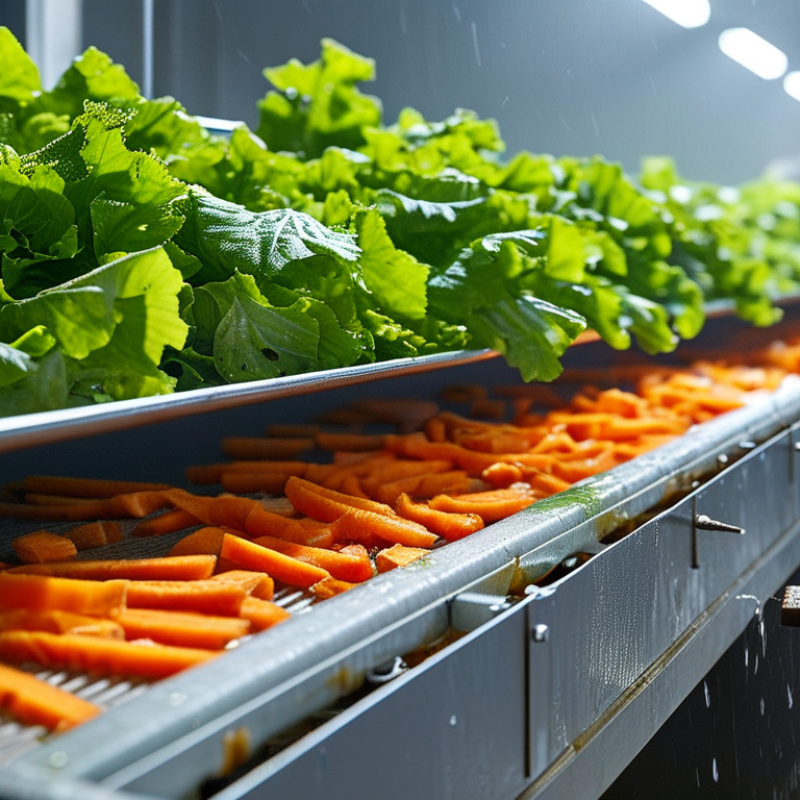
The value is visible on the production floor. After washing, lettuce leaves should leave the line dry enough to avoid pooling inside bags. Carrot strips should look clean, not glossy with residual water. A Vegetable Air Dryer can deliver this consistency through adjustable airflow, temperature, and belt speed. However, performance depends on crop variety, cut size, humidity, and sanitation design. The machine is not magic. Poor cleaning routines can still create serious quality risks.
Arun S. Mujumdar, a widely recognized drying researcher, wrote, “Drying is one of the oldest methods of food preservation.” His observation remains relevant, but modern processors need tighter control than traditional drying allowed. Reports from FAO and the U.S. Department of Agriculture repeatedly emphasize efficient post-harvest handling, quality preservation, and waste reduction. Those priorities explain why buyers examine energy use, airflow uniformity, gentle handling, and cleanability before purchasing. A cheaper dryer may reduce capital costs, yet increase product damage or operating expense. That trade-off deserves careful testing with real vegetables, not only supplier demonstrations.
Vegetable Moisture: Why Fresh Produce Commonly Contains 70–95% Water
Fresh vegetables commonly contain 70–95% water, depending on the crop, variety, maturity, and growing conditions. Leafy greens often feel almost saturated after washing. Carrots and peppers hold less visible moisture, yet their cut surfaces still release water quickly. This moisture supports freshness, but it also complicates food processing.
In practical processing, surface water can dilute seasonings, slow slicing, and increase sticking on conveyors. It may also create uneven drying when vegetables enter a dehydrator. A vegetable air dryer uses controlled airflow to remove surface moisture before cutting, packing, or further processing. I have found that gentle, even airflow protects delicate leaves better than aggressive heat. The vegetables stay cleaner and maintain a more natural texture.
A dryer is not a magic fix. Internal moisture remains. Operators must still adjust airflow, temperature, and residence time for each crop. I once underestimated the effect of crowded loading, and the center layer stayed visibly wet. That small mistake changed the drying result. Regular checks are essential. Staff should inspect product temperature, surface dryness, and weight loss during production. Some batches need more air, not more heat. Fresh produce is inconsistent by nature. A reliable drying process must respond to that variation rather than force every vegetable into one setting.
Why Buy a Vegetable Air Dryer for Food Processing? - Vegetable Moisture: Why Fresh Produce Commonly Contains 70–95% Water
| Vegetable |
Typical Water Content
(% by Weight) |
Water in 100 kg
of Fresh Produce (kg) |
Approx. Water to Remove
for 10% Final Moisture (kg) |
Processing Implication |
| Cucumber |
95.2% |
95.2 |
94.7 |
Very high moisture load; efficient air circulation is essential after washing and before further processing. |
| Lettuce |
95.0% |
95.0 |
94.4 |
Surface water can accelerate spoilage and cause packaging condensation; gentle drying helps protect leaves. |
| Tomato |
94.5% |
94.5 |
93.9 |
High water content increases drying demand and makes temperature control important for quality retention. |
| Spinach |
91.4% |
91.4 |
90.4 |
Delicate leaves require even, low-damage airflow to reduce residual surface moisture without excessive wilting. |
| Broccoli |
89.3% |
89.3 |
87.9 |
Branching florets retain wash water, so controlled airflow can improve surface drying consistency. |
| Onion |
89.1% |
89.1 |
87.9 |
Surface moisture can affect slicing, seasoning adhesion, storage stability, and downstream frying or dehydration. |
| Carrot |
88.3% |
88.3 |
86.0 |
Moderately high moisture still requires reliable drying to improve handling and reduce water transfer during packaging. |
| Potato |
79.8% |
79.8 |
77.6 |
Lower than leafy vegetables but still water-rich; surface drying is useful before frying, coating, or further dehydration. |
Calculation note: Water-removal figures are approximate estimates for 100 kg of fresh produce, assuming the stated representative moisture content and a final moisture content of 10% on a wet basis. Actual values vary with cultivar, maturity, season, washing conditions, cutting size, and process settings.
Reference basis: Representative raw-vegetable moisture values are consistent with commonly reported USDA FoodData Central composition data; values are rounded for practical process comparison.
Drying Science: How Airflow Reduces Water Activity Below 0.60
Why Buy a Vegetable Air Dryer for Food Processing?
A vegetable air dryer earns its place when airflow controls water activity, not merely surface moisture. Water activity measures available water for microbial growth. It differs from total moisture content.
The U.S. FDA Food Code identifies 0.85 aw as an important control threshold. Below 0.60 aw, most bacteria, yeasts, and molds cannot grow. This target supports safer, more stable vegetable ingredients when validated properly.
Airflow removes humid air from each slice. Fresh, drier air then restores the drying gradient. Even airflow matters more than extreme fan speed. A carrot strip may feel dry outside while remaining flexible inside. That hidden moisture can cause quality problems later.
I have seen uneven loading create pale edges and soft centers. It is easy to blame temperature. The real issue may be poor air distribution.
The FAO’s State of Food and Agriculture 2019 reports that about 14% of food is lost between harvest and retail. Controlled drying can help reduce losses from short shelf life.
However, reaching 0.60 aw needs measurement, not guesswork. Use a calibrated water activity meter, record batch conditions, and test the thickest pieces.
The ICMSF emphasizes controlling water activity alongside sanitation and temperature. A perfect reading does not guarantee perfect food. Oxidation, color loss, and rehydration quality still require attention.
A vegetable air dryer becomes valuable when its airflow, loading pattern, and endpoint testing work together.
Food Safety: How Controlled Drying Supports HACCP-Based Processing
Why Buy a Vegetable Air Dryer for Food Processing?
A vegetable air dryer can make HACCP-based processing more controlled and measurable. It removes surface moisture after washing, blanching, or cutting. This matters because wet surfaces can support microbial growth and encourage cross-contamination. Air temperature, airflow, drying time, and product load should follow a documented process limit. Operators can then repeat conditions across production batches. Small details matter. A crowded tray can dry unevenly.
Food safety teams should connect drying settings to a hazard analysis. Moisture targets may include water activity, surface dryness, or a defined residual moisture range. These targets need verification with suitable instruments and sampling plans. Calibrated sensors and reliable records help demonstrate that controls are working. Cleaning access also matters, especially around fans, filters, drains, and product-contact surfaces. Hidden residue can weaken an otherwise careful sanitation program.
A dryer is not automatically safer. Poor airflow may leave damp pieces in the center of a load. Excessive heat may damage color, texture, or nutritional quality. The uncomfortable part is that a completed record can still hide a weak process. Teams should review deviations, inspect random samples, and challenge their assumptions during validation. Employee training should cover loading patterns, sanitation checks, and responses to abnormal readings. A practical HACCP system depends on evidence, not confidence alone.
Quality Control: Why 40–70°C Airflow Helps Preserve Color and Texture
A vegetable air dryer gives processors closer control over heat, airflow, and drying time. In daily production, that control matters more than speed alone. A stable 40–70°C airflow can remove surface moisture without aggressively cooking delicate vegetables. Green beans may retain a fresher color. Carrot slices can keep firmer edges. Texture still depends on slice thickness, sugar content, and initial moisture.
Temperature is only one part of quality control. Airflow must reach each tray evenly, or crowded areas may remain soft. I would check product temperature, not just the display setting. A chamber reading of 60°C does not guarantee that every vegetable piece receives the same treatment. Small temperature probes and regular moisture checks can reveal uneven drying.
Lower settings often suit leafy vegetables and thin slices. Higher settings may work better for dense pieces, but they demand closer observation. Too much heat can darken cut surfaces and create a hard outer layer. Too little airflow may extend drying and increase handling risks. There is no perfect setting for every batch. A reliable process records slice size, loading weight, drying time, and final texture, then adjusts one factor at a time. Expect some trial and error.
Waste Reduction: How Dryers Address the 20–40% Fresh-Produce Loss Range
Why Buy a Vegetable Air Dryer for Food Processing?
Fresh produce can lose 20–40% of its value before sale, depending on handling, crop, temperature, and transport conditions. Surface water after washing often speeds decay, weakens packaging, and leaves vegetables looking tired. An industrial air dryer removes this moisture gently, helping vegetables stay cleaner and more presentable during storage.
The real benefit is waste reduction. Drier leaves and cut vegetables usually create fewer wet patches inside containers. That can reduce microbial growth risks when combined with proper refrigeration and sanitation. Drying also limits rejected loads caused by dripping packages or poor shelf appearance. However, a dryer is not a cure-all. Poor cooling, rough handling, and delayed processing can still destroy quality. Results should be measured by product type, airflow, drying time, and actual waste records.
Tips: Test one crop first. Inspect leaves under bright light. Record moisture, bruising, shelf life, and rejected weight. Avoid excessive airflow, which may damage delicate greens. Clean and sanitize contact surfaces on a documented schedule. A small trial may reveal flaws that a sales estimate misses.